
Some dinners come together easily, and others turn into a wrestling match. The difference often has little to do with the recipe. It comes down to what happens before the first burner clicks on. That calm, ordered head start has a name: mise en place.
Borrowed from professional kitchens, it’s the habit of reading, prepping, and organizing everything a recipe calls for so the cooking itself flows. Chefs have leaned on this for more than a century, yet it shrinks down to a Tuesday supper for two without missing a beat.
What the Phrase Really Means
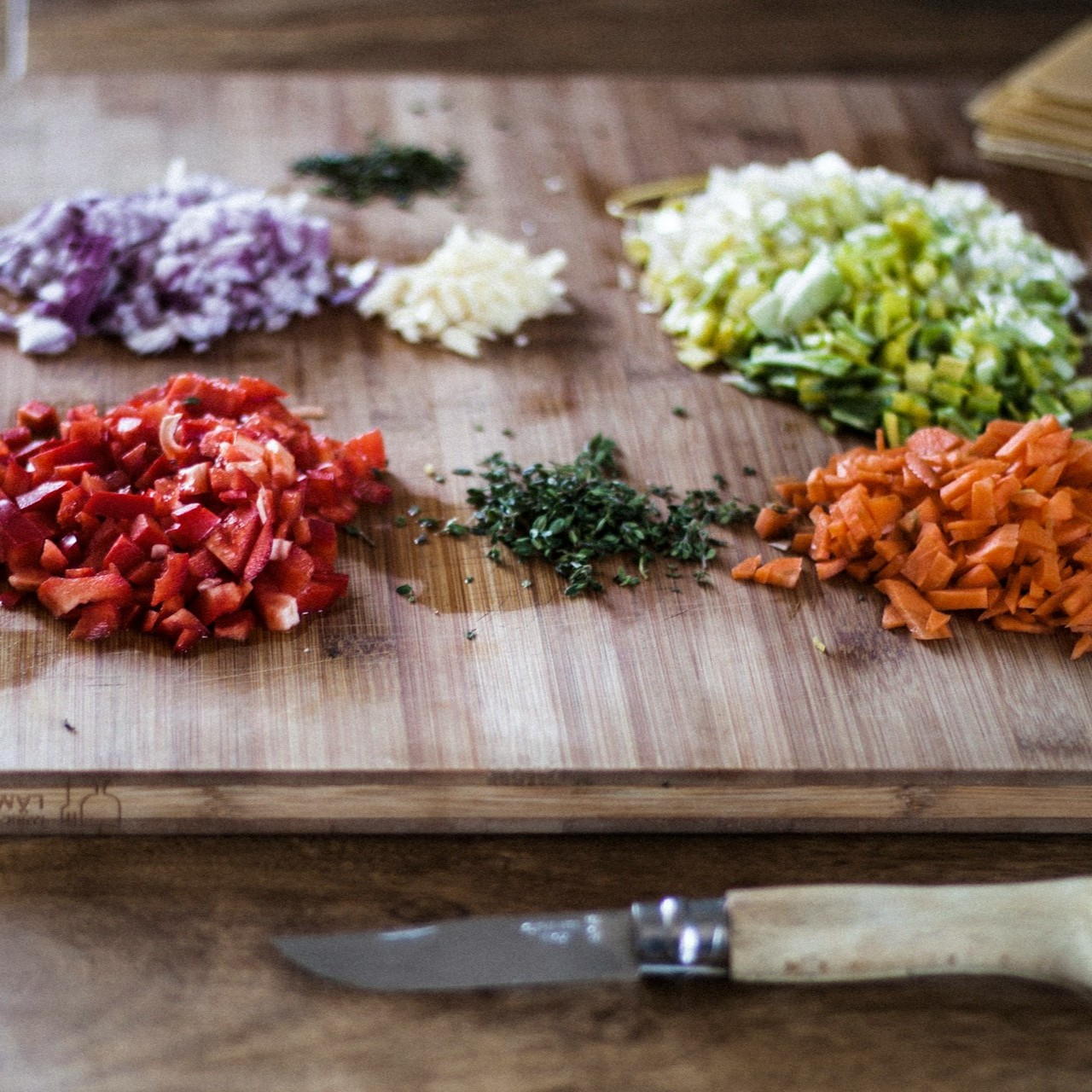
Mise en place is a French culinary term that translates to “everything in its place.” For a home cook, that means prepping and arranging every ingredient and tool before you turn on the stove.
Think of it as the difference between improvising and being ready. Rather than dicing an onion while something sizzles and edges toward scorched, you’ve already handled it, portioned your spices into little dishes, and set your pans within arm’s reach. When the instructions say “add the garlic,” it’s right there, peeled and waiting.
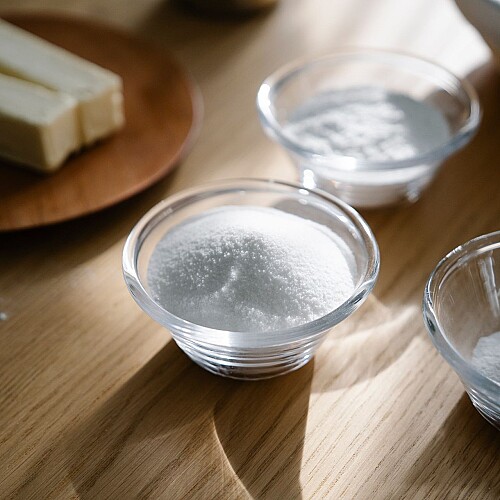
Done well, a finished station resembles a cooking-show still: neat rows of glass bowls, each holding one element, lined up in the sequence you’ll need them. That picture is a working map of the meal, and it tells you that everything’s accounted for.
It helps to name what the habit isn’t. This isn’t only chopping ahead. The reading, the measuring, the sequencing, and the wiped-down surface all count, too. What you’re building is as much a mindset as a tray of cut vegetables.
Why It’s Worth the Extra Minutes
A little mise en place costs you effort up front, and those minutes buy back far more after the burner’s lit. On top of that, the practice reshapes how the process feels. The payoff shows up in five places:
Nothing burns while you scramble. A hot pan waits for no one. With your shallots already sliced and your sauce components measured, you can keep the pace the recipe wants instead of racing it.
The stress fades. Much of the tension at the stove comes from doing three jobs at once. Getting the prep done removes the juggling, so you’re following steps rather than fighting fires.
You cook faster. With each element portioned and close by, there’s no pausing to hunt, rinse, or weigh things mid-step. Your active time on the range shrinks noticeably. Our kitchen efficiency guide builds on that momentum with more ways to streamline the process.
Cleanup gets simpler. Tackling the knife work in one batch means a single round of boards and blades, not a sink that fills steadily as the meal goes on.
The food turns out better. Timing rules the moment heat’s involved. Undistracted, you catch the second the butter foams or the edges go golden, and you pull each piece at its peak. Our cooking tips and techniques guide covers what to do once you’re there.
Even handling half your prep tilts the whole meal in your favor. Think of it as banking attention. Everything you settle beforehand is one less thing tugging at your focus when the tempo picks up.
How to Get Everything in Place
Good preparation follows a natural rhythm. Work through these six moves in sequence, and your station will be ready. This is where mise en place becomes muscle memory.
The Read-Through
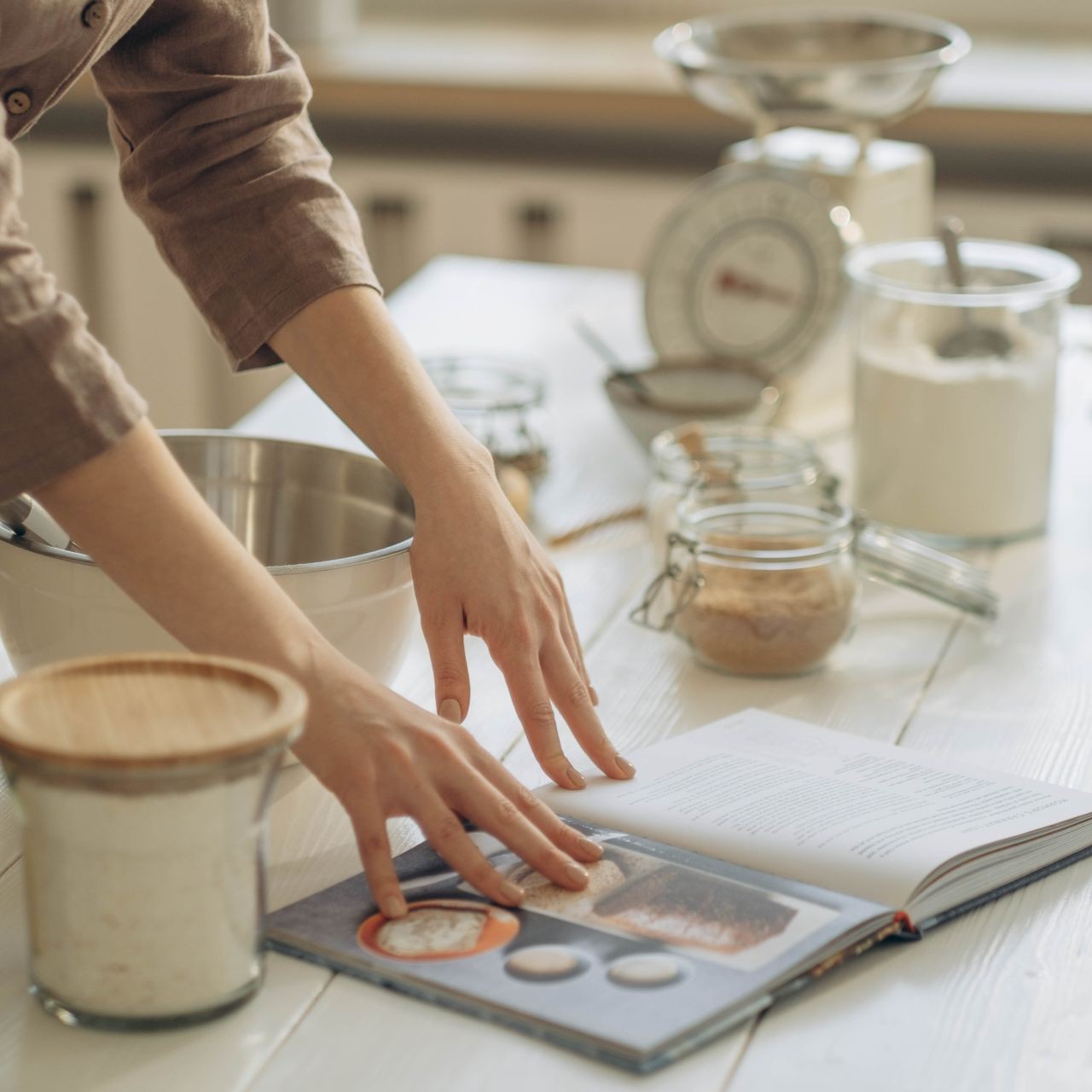
Read the recipe start to finish before you touch a single ingredient. You’re scanning for surprises, like a marinade that needs an hour, a skillet you should be heating, or a step where two things happen together. Understanding the whole arc means no unwelcome twists partway in.
Keep a pen close. Jotting the tricky timings in the margin or on a sticky note saves you squinting at dense paragraphs once your fingers turn oily. Flag which items share a moment, too, so you can group them when you prep.
Gathering Your Ingredients
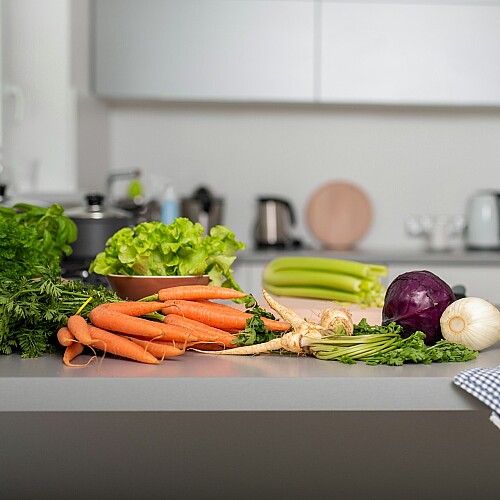
Pull everything the dish requires onto the counter, from the headline proteins down to the last pinch of salt. Stand the items up in a row, and run the list one more time. This is when you catch the missing lemon or the near-empty bottle of oil while there’s still a chance to adjust or borrow.
If a component lives in the freezer or needs to lose its chill, this is your cue to grab it now. Rounding it all up first also turns a long roster into something you can see and manage at a glance. It’s the surest way to avoid a mid-recipe dash to the corner store.
Measuring and Prepping
Now portion and cut. Wash your produce, then chop, slice, dice, or mince each item the way the recipe specifies. Pre-measure your seasonings, liquids, and dry goods into small containers or ramekins so they’re ready to tip straight in. A nesting glass set like the Anchor Hocking 10-Piece Mixing Bowl Set gives you every size from a pinch bowl to a full quart, and they stack flat when you’re done.
Group by when things go in, not by what they are. Two vegetables that hit the heat together belong in one dish, while a garnish that lands at the very end deserves its own. Nesting measuring cups make mise en place quicker, and our kitchen prep tools guide covers the rest of the lineup.
Arranging in Cooking Order
Lay your filled bowls out in the sequence the recipe uses. Aromatics that go in early sit closest; the garnish that finishes the plate waits at the back. This bit of choreography lets you reach for the correct dish at the exact instant, without checking the page mid-sizzle.
Left to right, in the direction you naturally work, is the classic layout, but what matters more than direction is being able to glance down and know exactly what comes next.
Tools, Pots, and Pans
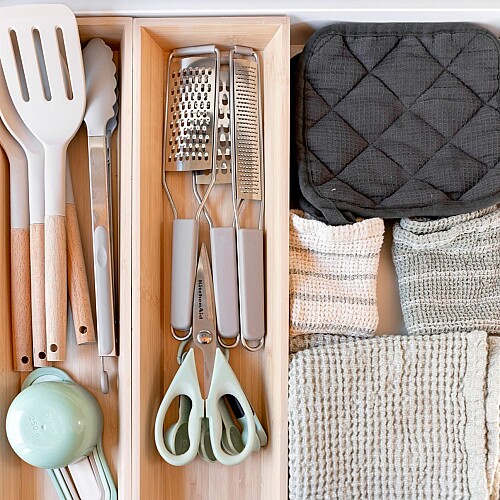
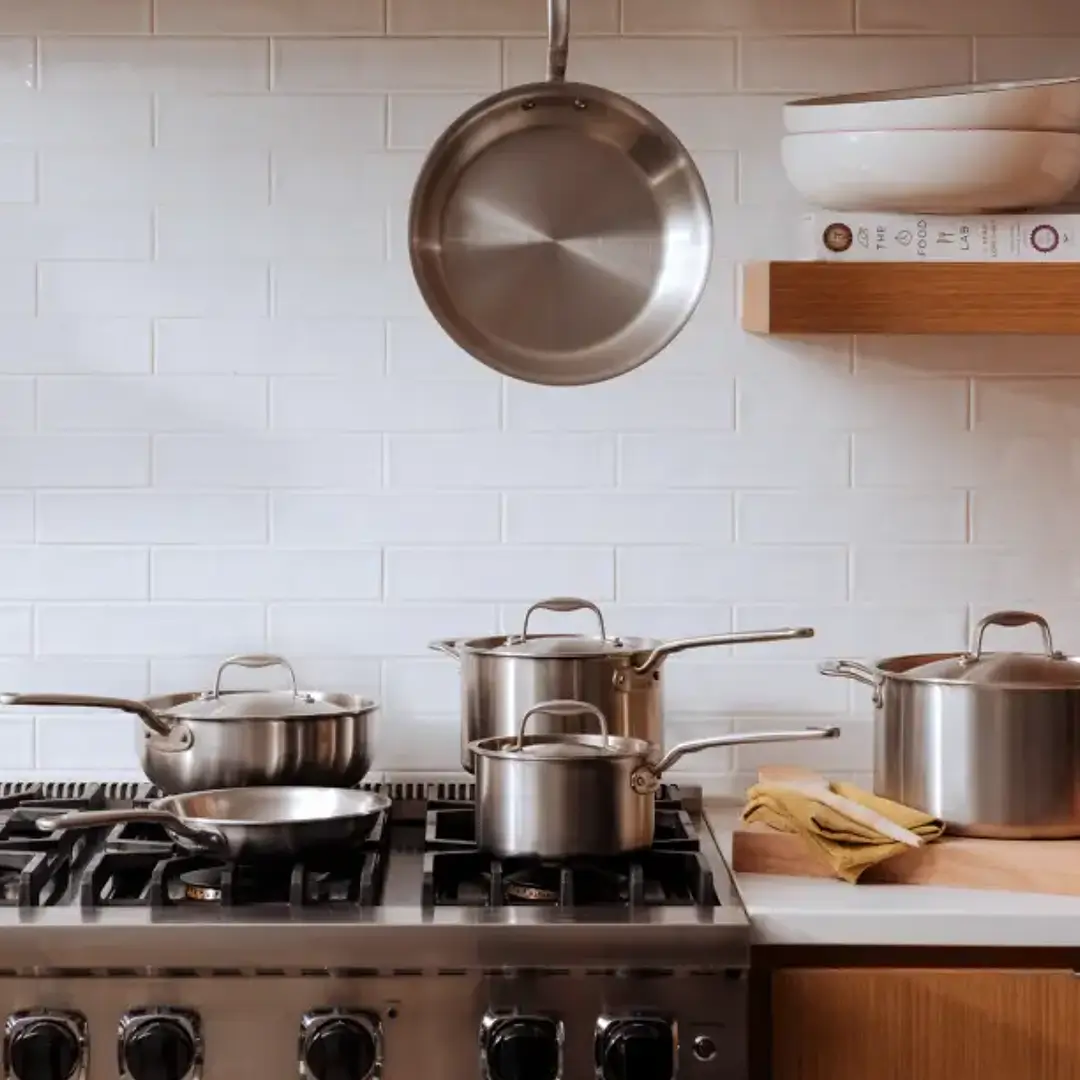
Gather your hardware next. Lay out the knives, spoons, tongs, and turners you’ll want, plus the pots and pans the recipe names, roughly in the order they arrive. A warm skillet resting on the range and a spatula already close at hand sound like tiny details, yet they clear away the little searches that break your rhythm.
Run the dish once more in your head, and picture each action. Whatever you mime reaching for, a whisk, a colander, a peeler, is exactly what belongs out on the counter.
A Tidy Station
Clear the debris before you cook. Toss the onion skins, stack the empty packaging, and wipe things down. A clean workspace gives you room to move and keeps you tidying along the way instead of facing a mountain at the finish. By the time the counter’s wiped, your mise en place is complete, and the cooking can finally begin.
Common Slip-Ups to Dodge
Even a solid prep habit has a few traps. Sidestep these:
Readying delicate items early. Tender herbs bruise, dressed greens wilt, and sliced apples brown. Leave the fragile pieces for last, or hold them with a little care until the pan calls.
Reaching for too few containers. Cramming three seasonings into a single dish to dodge washing defeats the purpose. Small vessels are cheap insurance against a mistimed pinch.
Skimming the recipe rather than reading it. A missed “meanwhile” or “reserve half” is how a smooth plan unravels at the worst possible second.
Lighting the burner before you’re set. If the oil’s smoking while your onion sits only part-diced, you’re already behind. Let the prep lead, and bring on the heat at the end.
Over-preparing a simple supper. Not every meal needs a dozen bowls. Scale the effort so the groundwork saves time instead of swallowing it.
Where the Practice Comes From
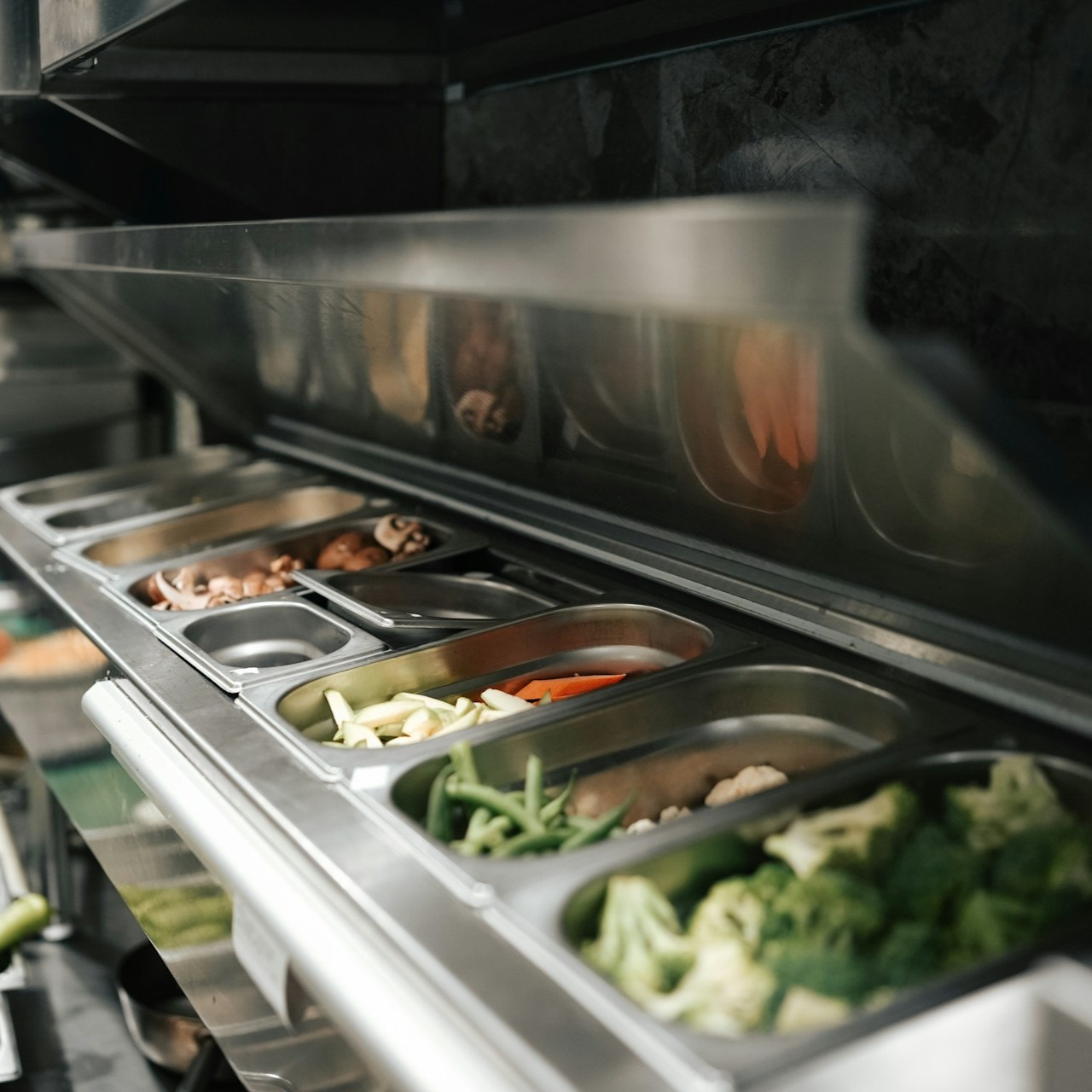
None of this began at home. The system grew out of professional kitchens, where a busy line has no patience for hunting or second-guessing.
Auguste Escoffier, the French chef who shaped so much of modern restaurant cooking, is widely credited with formalizing the brigade de cuisine, the strict station-based structure that still governs the pros today. Every cook owned a post, and each spot sat primed before service so a flood of orders could be met without sliding into chaos.
The concept drifted out of restaurants and into home kitchens over the decades, helped along by cooking shows, where those tidy rows of glass dishes made preparation look almost aspirational. What started as rigid discipline softened into a friendly ritual anyone can keep.
That backbone is why they guard their prep so fiercely. You don’t need a stainless-steel brigade to borrow the idea, though. The principle travels from a Michelin dining room to a studio apartment intact.
Making It Work on a Tuesday Night
A weeknight dinner doesn’t call for the full restaurant treatment, and that’s the charm of mise en place at home. You size it to the meal in front of you. The habit flexes to fit whatever you’re making.
For a quick stir-fry, your version might be four little dishes and a cutting board. For a holiday spread, it could be an entire counter mapped out the night before. Same principle, wildly different scale.
A few ways to pare it down after a long day:
Prep during downtime. Cut your vegetables while the water climbs to a boil or the oven comes up to temperature.
Corral the bowls on a tray. A sheet pan gathers your prepped pieces so clearing up later is one easy lift.
Handle the slow jobs early. Mince the garlic or whisk together the sauce in the afternoon, then tuck it in the fridge until go time.
Batch across meals. Dice a bit of extra onion, or rinse a few more greens while you’re at it, and tomorrow’s groundwork is already half done.
Even a pared-back setup earns its place among the food prep fundamentals that make weeknight cooking manageable. Ten minutes of prep can turn a frantic supper into a quarter-hour of ease at the stove, which is the whole point of cooking at home instead of ordering in.
Prepping in a Tiny Kitchen
No counter to speak of? A cramped kitchen makes the case for mise en place all the louder because there’s nowhere to improvise once the pan is going. The trick is to work in a way that borrows room and hands it right back.
Prep in waves. Cut one component, shift it off your main surface onto a spare plate or a shelf, then start the next. You only ever need clearance for the job in front of you.
Reclaim hidden inches. A sturdy cutting board laid across the sink or a rimmed baking sheet resting on the stovetop doubles your usable space in seconds.
Go vertical. Pick prep containers that stack, or portion several items onto one segmented tray so your setup climbs upward instead of sprawling out.
Combine early. Anything that meets the heat at the same moment can share a single dish, which leaves fewer vessels fighting for your elbow room.
Stage on something you can move. A rimmed tray keeps your finished prep together and off the work surface. When you need the space back, slide it to a shelf or the far edge of the counter.
Tight quarters reward the tidy-as-you-go habit more than any other. Keep a scrap bowl close, wipe down between steps, and even a two-burner corner can turn out a dinner you’re proud of.
Mise en Place, Every Time
Strip away the French and the restaurant lineage, and you’re left with a plain truth: A few minutes of preparation makes all that follows easier. That early stretch is where a good dinner is won. The technique is more than a century old, yet it still feels like a secret the first time it clicks.
Start small. Choose one recipe this week, and lay out every component before you cook a thing. After you’ve felt a steadiness a handful of times, the routine holds on its own, and you’ll wonder how you ever managed while searching for the paprika.
There’s a real calm that comes with it, the kind that turns cooking back into something you look forward to rather than dread. Everything in its place. That’s the difference between the dinner that fights you and the one you have fun with.
All details were verified at the time of publication and may change without notice. Please confirm current information before making a purchase.



Leave a Comment
Your email address will not be published. Required fields are marked *