
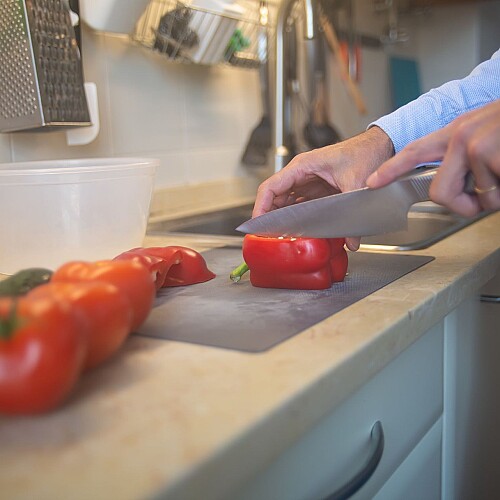
The oil is shimmering, the garlic is chopped and ready, and the tongs are two drawers away on the far side of the room. By the time you get back, the pan has gone from perfect to scorched. Where things live is the culprit, and that’s exactly what kitchen efficiency fixes.
Nobody needs a bigger room to solve it. The biggest difference is which items sit within arm’s reach of the burners, how the rest of your gear is grouped, and what you do with the 90 seconds while water comes up to a boil. You can do all of it tonight, for free, and undo any of it just as easily.
The fix breaks into four parts: why your space feels awkward and what to do about the parts you can’t move, three storage zones you can reorganize in an afternoon, three habits that stop them from unraveling, and what to do when your kitchen is too small or too strangely shaped for the usual advice. None of it asks you to move an appliance or buy a cabinet.
The Work Triangle Explained
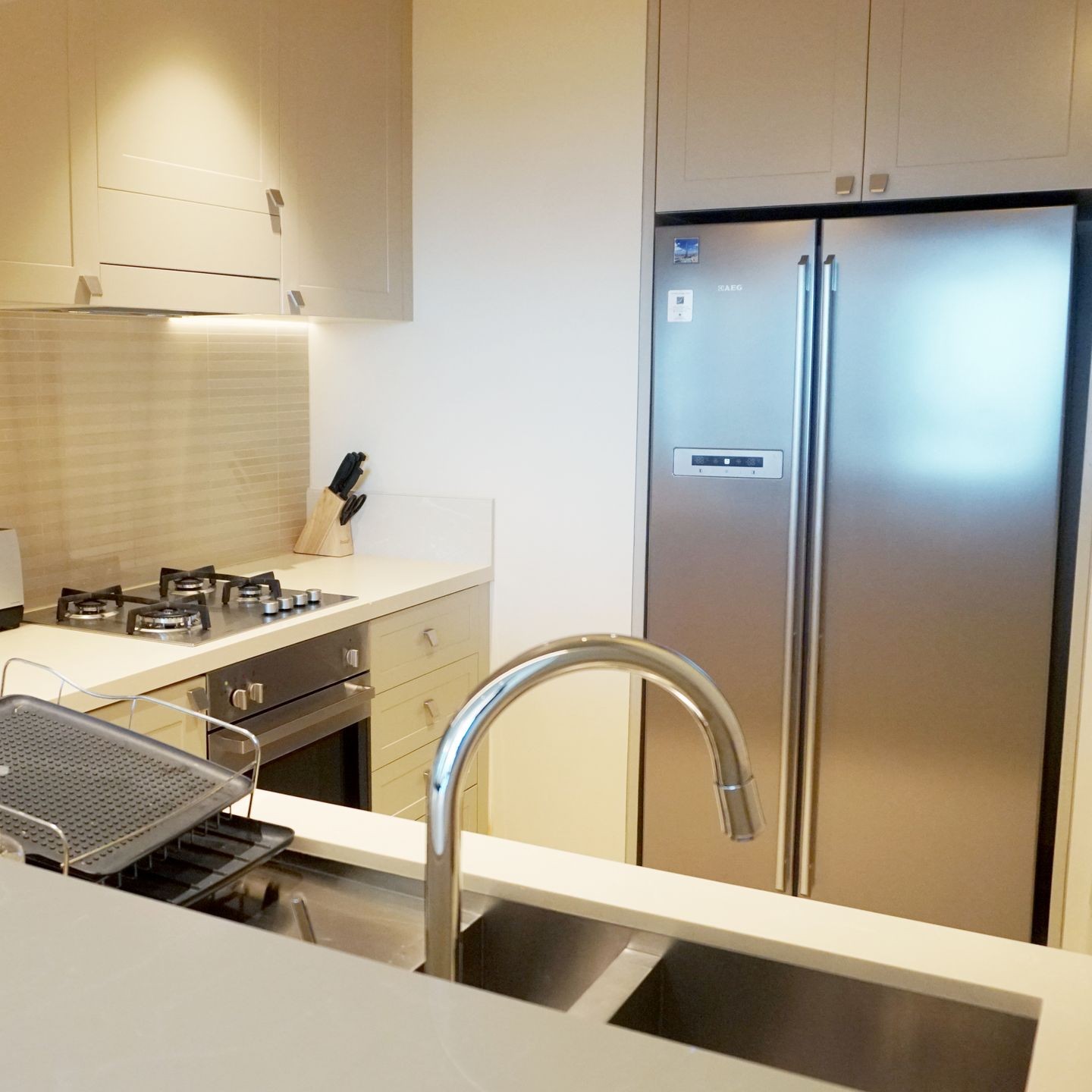
The work triangle is the path connecting your sink, your refrigerator, and your stove. Those three points absorb nearly all the movement in a recipe, so the shape they form is what decides whether cooking flows or turns into laps. Name that shape, and most of what feels off about your space adds up.
Treat it as a diagnosis rather than a rule. Plenty of kitchens were laid out by someone who never cooked a meal in them or were frankensteined together over generations of homeowners. Those appliances and odd angles are staying put no matter what anyone recommends. Knowing which stretch is the bad one tells you which cabinet to tackle first, and that part is entirely yours to change.
Why Your Space Ended Up This Way
Older homes carry this the worst. A kitchen that’s been lived in for decades is rarely one design. It’s a stack of them: a dishwasher wedged where a cabinet used to stand, an appliance that outgrew its alcove two replacements ago. You inherited those seams, and not one of them was your call.
Renters land in the same place by a different road. The layout came from a landlord’s budget rather than a cook’s logic, and you couldn’t change it even if the lease allowed it. What makes up for that is portability. None of this gets screwed to a wall, so the whole system comes with you to the next lease. Kitchen efficiency is one of the few things about a rental that’s genuinely yours.
Know that you’re in good company on this one. New York is famous for it. In some older apartments, the bathtub sits in the kitchen, parked right alongside the sink, and plenty of those buildings are still lived in today. Whatever nightmares your kitchen is causing you, just remember that someone out there is dicing onions next to a tub tonight.
Walking Your Own Triangle
Start by walking. Sink to fridge, fridge to burners, burners back to sink, counting steps as you go. Almost everyone finds one stretch that’s either uncomfortably tight or too long, and that’s where the friction has been hiding.
If you want a number to check yourself against, the National Kitchen & Bath Association’s planning guidelines put each side between 4–9 ft, with all three adding up to no more than 26 ft. This gives a rough sense of what reads as too cramped and what reads as too far.
Two questions come up constantly. An island only causes trouble when it juts into your path or forces a detour, so measure that swing before assuming the worst. Household traffic counts as an obstacle, too. If the route from the side door to the hallway runs past your burners, that’s a real cost even though nothing physical is in the way.
When a Stretch Is Too Long or Too Tight
You can’t move the refrigerator, but you can move your prep surface. Nothing’s holding it in place. If cold storage and the range sit at opposite ends, put your cutting board somewhere between them instead of at whichever end it happens to occupy now.
That single change splits a long haul into two short ones, and for anyone stuck with an awkward layout, it’s the biggest kitchen efficiency win on the table. It works almost anywhere because a board goes wherever there’s a clear counter. A rolling cart does the same job when no fixed surface sits in the right spot, parking mid-route as a waypoint you load up and push aside afterward.
The next fix is about frequency. A long trip only costs you once if you carry everything at once, so pull the full run of ingredients onto a sheet pan, and make the journey a single time rather than six. Corralling the cold items you touch daily into one bin turns half a dozen grabs into one.
Cramped is a different animal. The trouble is things colliding in one tight spot: a dishwasher door swinging into the walkway, a second cook reaching past you, a drawer that jams against what’s in front of it. Clear the clutter out of that spot, and handle the jobs there one at a time. Unload the dishwasher before you start cooking, not during, and the pinch eases.
When Your Layout Has No Triangle
Plenty of kitchens don’t form a triangle at all, and you can’t turn a square into one no matter how hard you shove the furniture. A single-wall layout lines all three points up in a row. A galley splits them across two facing runs, and some rooms simply strand the fridge around a corner on the far side of a doorway.
Those are quirks, and they don’t stop any of this from working because the shape isn’t really the point. What changes is the question, not how far you travel, but how often you turn. You can fix that kind of turning by moving objects.
Either way, the payoff lands the same. Kitchen efficiency starts improving the moment you can name the stretch that’s costing you because that tells you which drawer to empty first and which one to leave alone.
Reorganizing Into Storage Zones
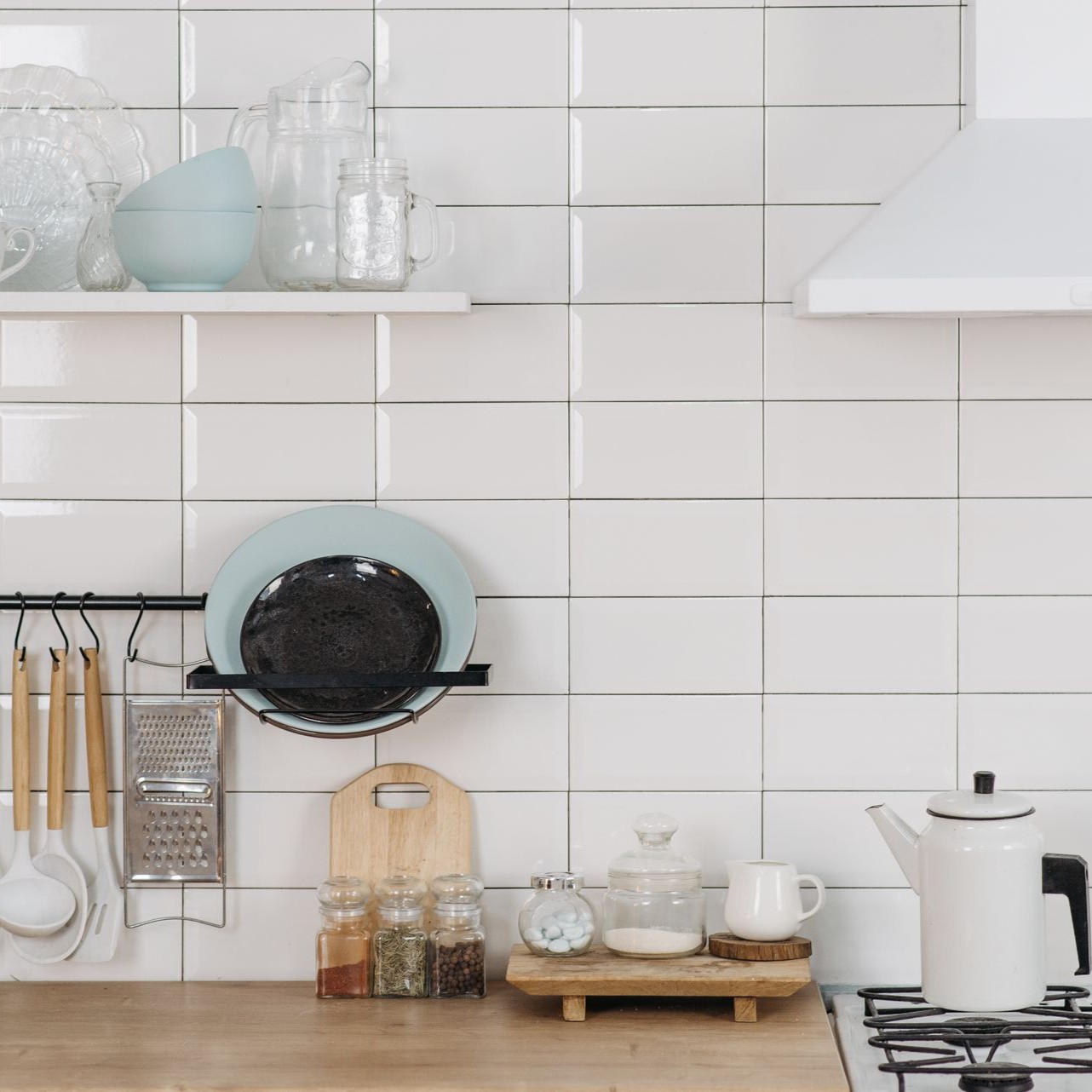
A zone is a cluster of tools and ingredients stored where you use them rather than where they happened to land the week you moved in. Three of them cover nearly everything a home cook does: one at the burners, one at your main work surface, and one at the sink. Reorganizing all three takes an afternoon and a willingness to move things that have sat in the same spot for years.
The test for each item is the same. Could you grab it without changing where your feet are planted? If the answer is no and you use the thing weekly, it’s currently living in the wrong place.
The Cook Zone
Anything that meets heat belongs within a pivot of the range. Pots, pans, and Dutch ovens go in the cabinet directly below or immediately beside it. Tongs, wooden spoons, spatulas, and a fish turner stand upright in a utensil crock right there.
Cooking oil, salt, pepper, and the eight or so spices you reach for weekly belong here, too. Frequency is the sorting principle. The paprika you use every Sunday has far more in common with your olive oil than with the star anise you bought for one recipe in 2023. Everything that didn’t make the cut here still needs a logical home, and our pantry staples guide covers what’s worth keeping on hand.
The Prep Zone
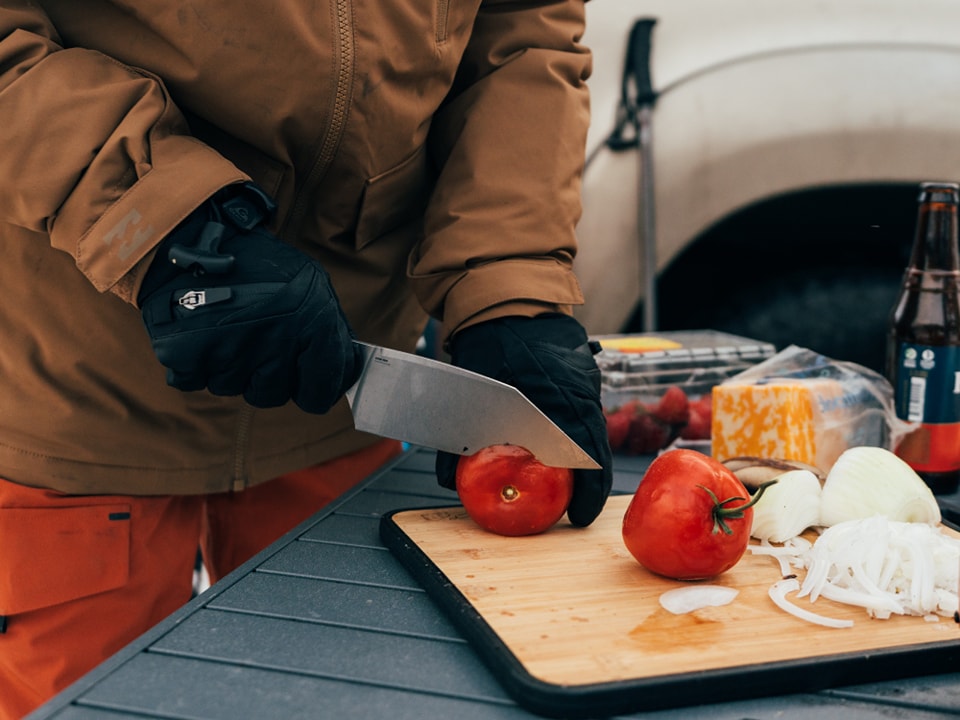
This one anchors to your largest uninterrupted stretch of counter, wherever that happens to fall. Cutting boards, knives, mixing bowls, measuring spoons, a peeler, and a box grater all belong within reach of that surface. Keep the drawer beneath it loose enough to open with a full hand. The National Kitchen & Bath Association also calls for a landing area of at least 24″ on one side of the sink and 18″ on the other, a useful benchmark for how much clear surface any task needs.
A cramped chopping area is the most common reason cooking drags, and it’s usually caused by storage decisions made years earlier for reasons nobody remembers. If your boards live above the fridge and your bowls live under the window, you’ve been paying a tax on every meal since you moved in.
The Clean Zone
Trash, recycling, dish soap, scrubbers, and towels all gather at the sink, along with the dishwasher if you own one. Where the bin sits deserves more thought than it usually gets since you toss scraps into it dozens of times before a meal’s done.
There’s a fourth job most guides skip: putting things back. Plates, glassware, and lidded containers should land beside the dishwasher or drying rack rather than across the room so that unloading becomes one motion instead of a lap around the floor.
When Two Areas Share One Counter
This is the situation that applies to most people, which makes it the place where kitchen efficiency is won or lost. If a single run of counter has to handle both chopping and washing, give each job its own end. Keep boards and knives near where you chop, and sponges, soap, and scrubbers over by the sink.
The space between them stays clear, and that’s where you actually work. Since the two never overlap, you’re not nudging the soap aside to grab a board.
Daily Habits That Keep Things Moving
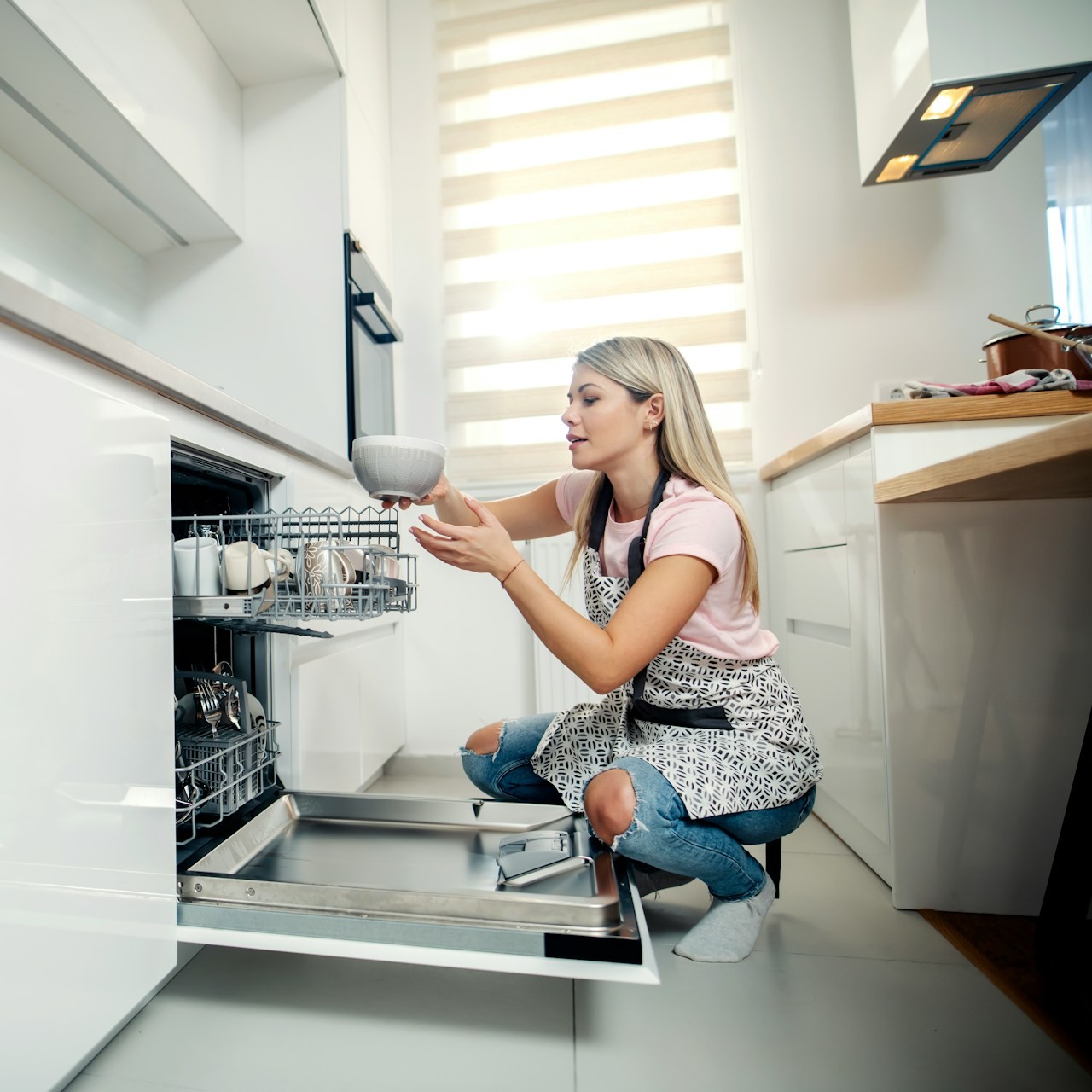
Good storage puts everything within reach, but it can only do so much on its own. A well-organized kitchen still bogs down when the counter is buried and last night’s dishes are still in the sink.
Three habits close that distance: starting from a clear surface, corralling scraps in a bowl, and wiping down during the pauses. They take a couple of minutes each, and they compound, which is what turns a good setup into lasting kitchen efficiency.
Start From a Clear Surface
Counters collect. Mail, chargers, the stand mixer from Sunday, a bag of onions nobody put away. Every one of those steals room from the patch you truly need once a recipe starts moving.
Decluttering that stretch takes roughly two minutes and delivers the highest return of anything you can do beforehand. Treat it as step one of the recipe rather than a chore to get around to eventually, and it no longer feels like housework.
Park a Scrap Bowl at Your Elbow
Set two vessels next to your board: one for peelings and compost, one for packaging and genuine trash. Skins, stems, and wrappers drop straight in rather than piling up around your hands. Pair the bowls with a proper mise en place, where everything is measured before the heat goes on, and the two together do most of the work.
The gain isn’t only in steps saved. An uncluttered board is easier to think on, and the benefit shows up most on the nights when three pans are going at once and something is about to catch.
Clean During the Downtime
Cooking is full of dead air, like liquid heating, onions softening, or a roast resting under foil. Those pauses are exactly when plates get washed and surfaces get wiped, and the trick is deciding in advance what each pause is for.
The worry people raise is falling behind on the actual food, which is fair. The rule that solves it is to only clean during a window you’ve already set a timer for. If nothing on the stove needs watching for the next four minutes, that’s the cutting board and a couple of prep bowls cleaned before the pile grows.
Kitchen Efficiency in Small and Odd Spaces
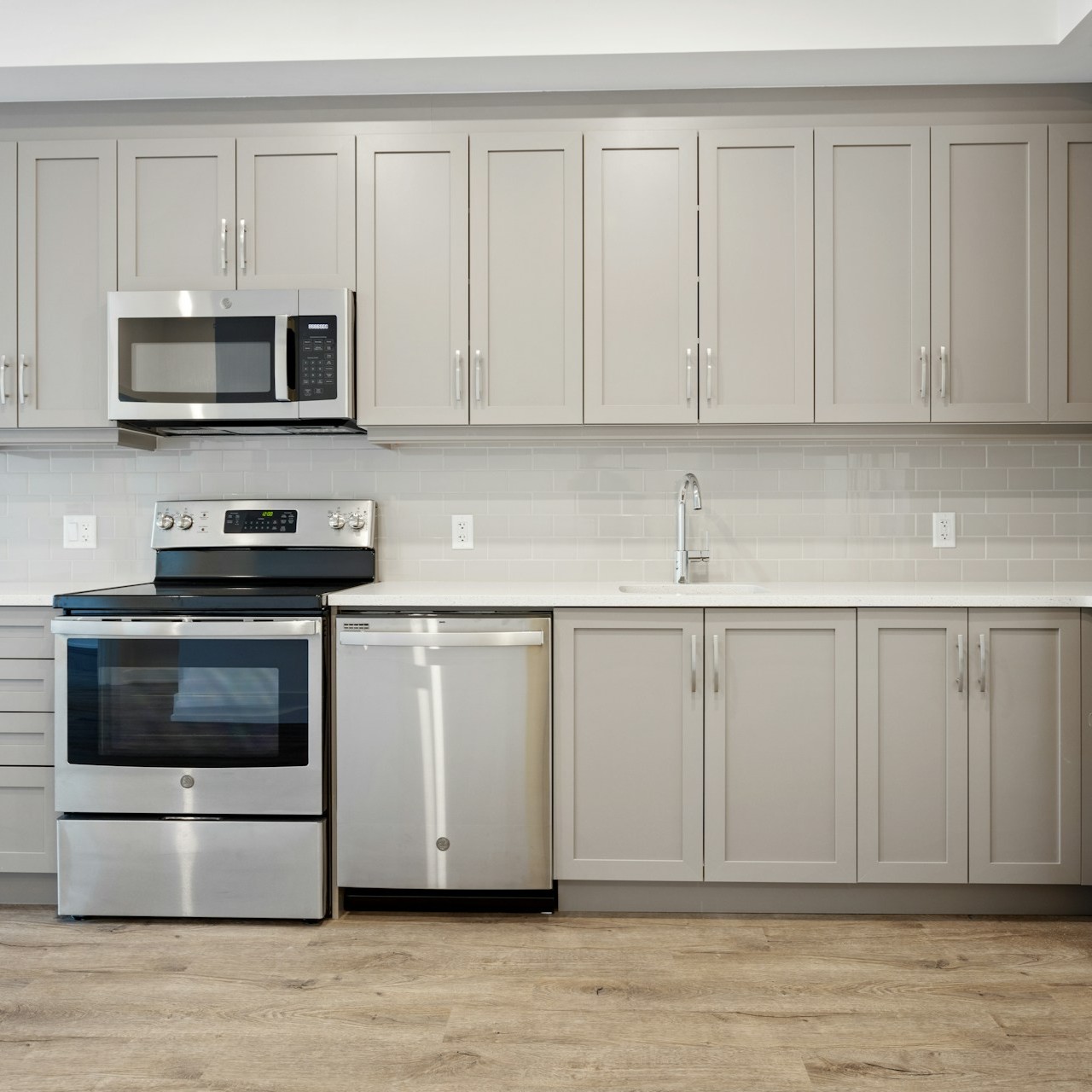
Small kitchens change what you’re up against. All the back-and-forth that eats time in a roomier kitchen barely happens here, so the real challenge becomes finding somewhere to set things down. Where there’s nowhere to spread out, the answer is to stack storage vertically and treat every workable inch as temporary rather than permanently assigned.
Apartment kitchens hit this hardest, and the constraint is almost always identical. Limited counter space is a problem you solve with habits instead of hardware because there’s rarely anywhere left to put more storage. Everything below survives a move and comes with you.
Galley and Single-Wall Layouts
In a galley, you rotate rather than travel, so the measure that matters is turns per task. Put your board on one run with the cooktop directly opposite, and most of a meal happens without a single stride.
A single-wall room strings everything along one line, which means sequence beats proximity. Arrange it cold storage, then washing, then chopping, then heat, so ingredients flow in one direction.
Borrowing Extra Counter Space
Where there isn’t enough counter, borrow some. A board cut to sit over the sink turns it into a chopping station any time the faucet isn’t running, and a sturdy sheet pan laid across a pulled-out drawer does the same thing at hip height.
A rolling cart is the most adaptable option available. It tucks against the side of the room between meals, rolls out when you need somewhere to put things, and doubles as overflow storage the rest of the week.
Vertical surfaces count as real estate, too, and they’re the first thing people forget. Anything you hang is something that no longer competes for the flat space you’re short of:
Wall rails for ladles, whisks, and measuring cups
Magnetic strips for knives
Hooks beneath upper cabinets for mugs and mesh produce bags
Over-the-door racks inside cabinets for lids, foil, and boards
The Compound Payoff
An empty surface makes prep quicker, and quicker prep leaves less debris behind while you cook. Less debris means a shorter cleanup, and a short cleanup is the whole reason you’re willing to do it all again on Tuesday.
No individual piece of this is dramatic. You get pans one cabinet nearer and a dish for peelings, then spend two minutes with a cloth before you start. What accumulates is the removal of tiny frictions, dozens of times per meal, until the room quits arguing with you.
Give it one weekend and a month of paying attention. You’ll know it worked when you don’t notice the setup at all because nothing interrupts you long enough to register. That quiet is the whole point, and it arrives without a single receipt.
Kitchen efficiency isn’t about square footage. It comes down to the next thing you need already sitting where your hand goes looking for it, something you can arrange tonight, for free, in whatever space you happen to have.
This article is for informational purposes only. The information provided was verified at the time of publication and may change without notice.



Leave a Comment
Your email address will not be published. Required fields are marked *